
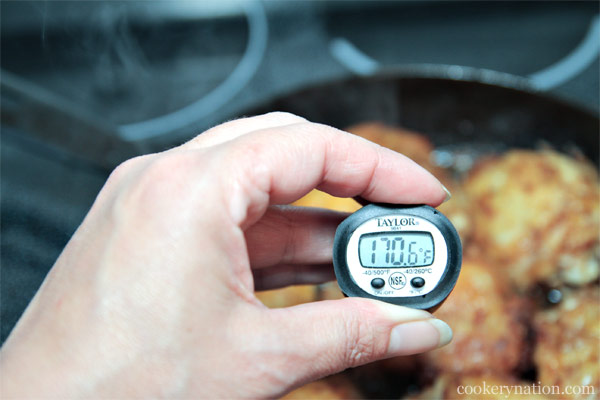
Temperature is crucial in cooking; fire is credited as the innovation that significantly advanced humanity.
Nowadays, we have much more sophisticated methods of heating our food, and can more accurately control its temperature.
Sometimes it seems like we have a never ending supply of recipes to choose from. But, once we dig in we see that we are stumped by the way that the recipe calls for temperatures.
- Gas Mark
- Fahrenheit
- Celsius
- Terms instead of degree measurement
Thankfully, there is no need to abandon the recipe altogether. Simply convert the temperature or term to one that you are more familiar with.
Below is a graphic showing the most commonly used temperatures and terms.
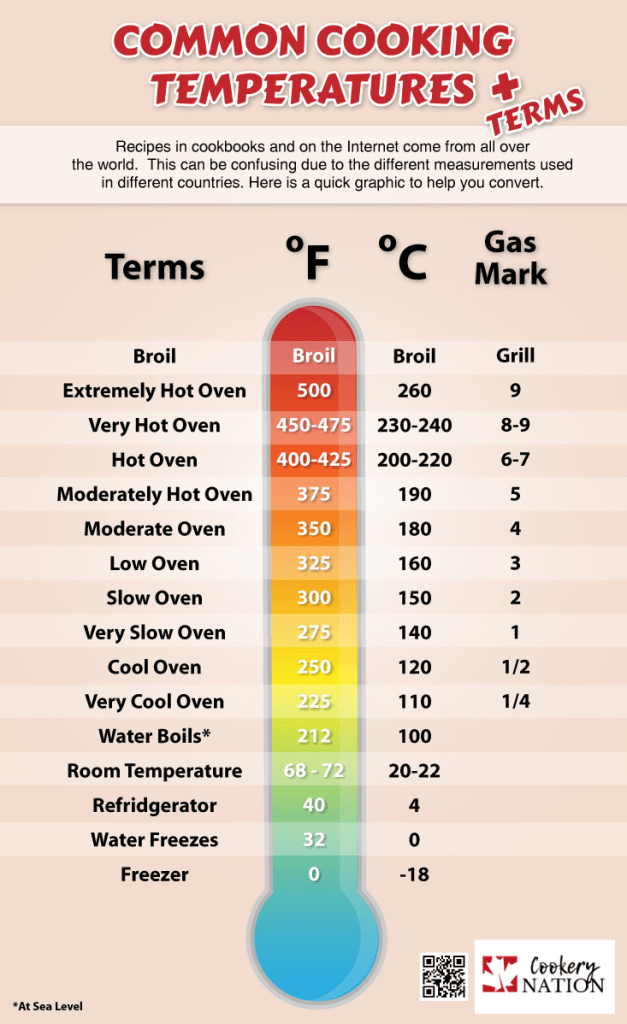
Common Cooking Temperatures and Terms
| Temp | Celcius | Fahrenheit | Gas Mark |
|---|---|---|---|
| Freezer storage | -18 | 0 | N/A |
| Water freezes | 0 | 32 | N/A |
| Refrigerator | 4 | 40 | N/A |
| Room temperature | 20-22 | 68-72 | N/A |
| Water boils | 100 | 212 | N/A |
| Very cool oven | 110 | 225 | 14 |
| Cool oven | 120 | 250 | 12 |
| Very slow oven | 140 | 275 | 1 |
| Slow oven | 150 | 300 | 2 |
| Low oven | 160 | 325 | 3 |
| Moderate oven | 180 | 350 | 4 |
| Moderately hot oven | 190 | 375 | 5 |
| Hot oven | 200-220 | 400-425 | 6 – 7 |
| Very hot oven | 230-240 | 450-475 | 8 – 9 |
| Extremely hot oven | 260 | 500 | 9 |
| Broil | Grill |




 Cookery Nation
Leave a comment