
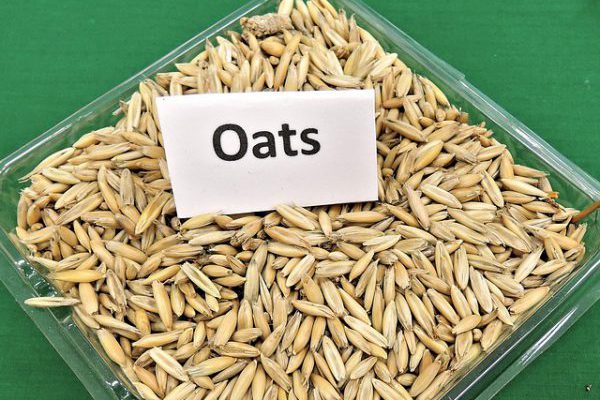
Oats are a wonderful grain that are high in fibre, protein, B-Vitamins and dietary minerals.
Despite their simple appearance, oats can be confusing for some people. Even though there is only one major type of oat, there are a few different ways of processing them.
One important thing people often forget is that all oats indeed are made equal. It does not matter how processed an oat, whether you cut, grind, roll or leave whole, all oats have the same nutritional content. This is primarily due to the fact that nothing is added or removed.
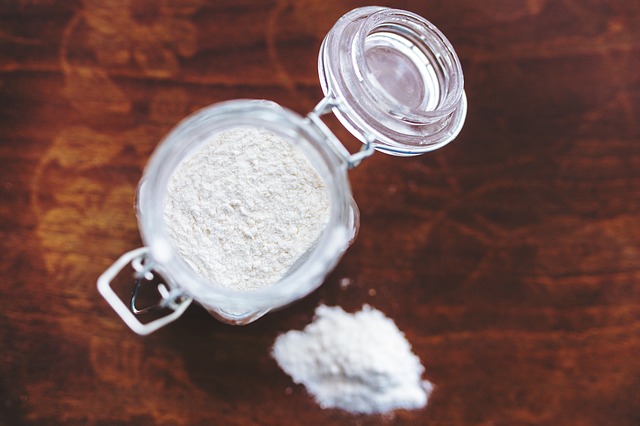
Even the steaming process that is involved in rolled oats does not alter the nutrition in any significant amount. Oat flour is still a whole grain because the entire whole groat is milled to make the flour.
Oat bran is slightly different, however, as it is made by only using the outer layer of the grain. This is why oat bran is not technically a whole grain.
Many people still think that Quick or Instant Oats must be nutritionally inferior to Whole or Steel Cut, but they are not. The big difference is texture and satiation. A Quick or Instant Oat fills you up less than eating other, less processed oats.
Substituting Oats
Many recipes call for a specific oat such as “Old Fashioned” or “Steel Cut”. In some cases any oat can be substituted. In others, they can’t.
The trick to knowing which oats can be substituted is by looking at the cooking times in the recipe.
- If the cooking time is relatively short, then avoid using a longer cooking oat.
- If the cooking time is longer, then using a quick cooking oat could result in a mushy dish.
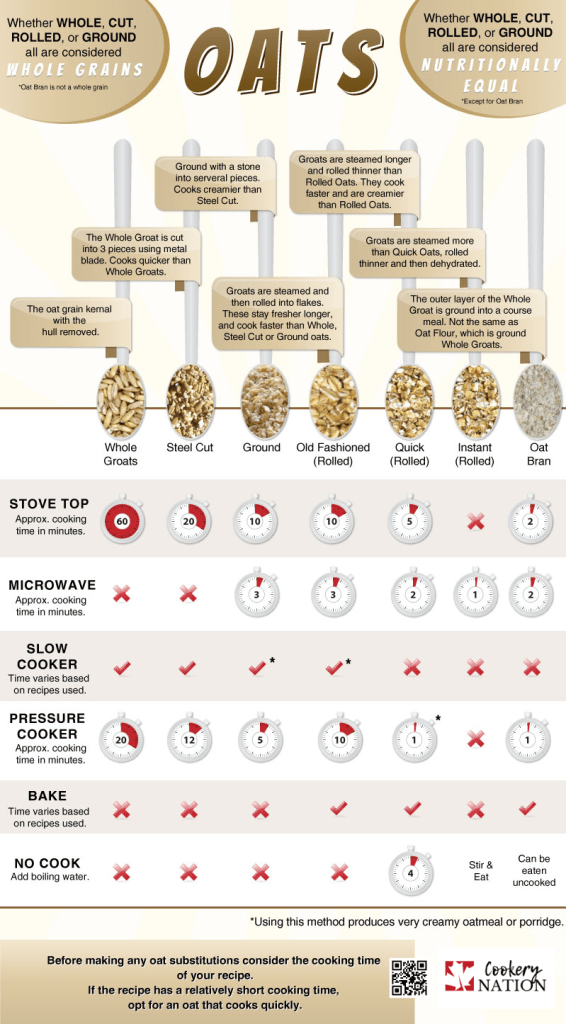
We have created a graphic to help you see the differences in the processed oats. We have also included the relative cooking times for each.
Keep in mind that all brands are different and may process their oats more or less. This graphic is just a general guideline.
A Note on Allergens:
For those who are gluten intolerant or have Celiac Disease, use oats with caution. Most oats purchased in North America are contaminated with gluten due to contaminated processing or growing. Another thing to consider is the Avenin in oats contain similar amino acid sequences as gluten. This can cause a negative immune response. Unfortunately, there is no way to predict which individuals will adversely react to these amino acids.
Helpful Infographic




 Cookery Nation
Leave a comment