
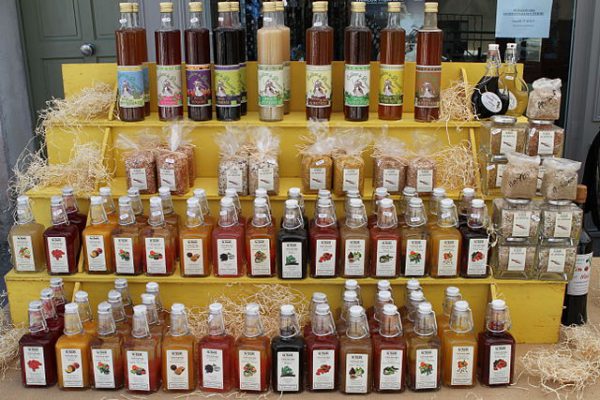
Go to your local grocery store and look for a bottle of vinegar. You will find there are many, many different types of vinegar.
From white, to red, to apple, rice and balsamic vinegar.
There seems to be more types of vinegar than you can shake a french fry at.
So, how can you tell them all apart, and what exactly is the difference between the varieties?
What Exactly is Vinegar?
To put it simply, vinegar is fermented ethanol (alcohol from fermented sugars, usually from fruits) using acetic-acid bacteria. This is why many vinegar varieties are named after a wine, like red wine or rice wine.
While there are quite a lot of different types of vinegar, there are just a few that you will likely encounter in your everyday cooking. The main list of vinegars are:
- White vinegar (the default “normal” vinegar made from distilled alcohol, usually very cheap)
- Red and white wine vinegar (contain some of the flavour of the wine)
- Apple cider vinegar (made from apples)
- Balsamic (made from a specific type of grapes, the Trebbiano, but is very expensive)
- Balsamic Modena (a much less expensive balsamic version that is flavoured with caramel and thickened to replicate the traditional variety. They are usually rated with a four-leaf system, where the more leaves represent a higher quality.)
Vinegar Uses
Vinegar can be used as a cooked ingredient or straight from the bottle.
Balsamic vinegar, for example, is often used as a condiment directly on food. You can use wine, apple cider and balsamic vinegar as a base for vinaigrette salad dressings.
White vinegar can be used directly on a few dishes, like french fries and popcorn, to introduce a tartness. Thanks to the high acidity, white vinegar can also have many non-cooking uses. Many people know of its cleaning properties, as it can literally melt dirt and grease.
You can also boil down certain vinegars, the most popular is balsamic vinegar, to produce a vinegar reduction. Creating a reduction:
- Thickens the liquid,
- Intensifies the flavour,
- Reduces the tartness.
Don’t limit the varieties of vinegars that you use. Experiment with wine, rice and apple vinegars to add extra flavour to meats, vegetables, grains and sauces.




 Cookery Nation
Leave a comment